





Applications – Marking of plastics
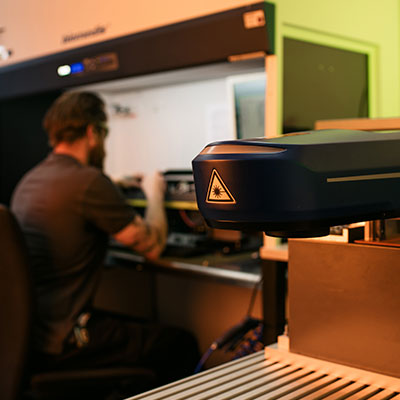
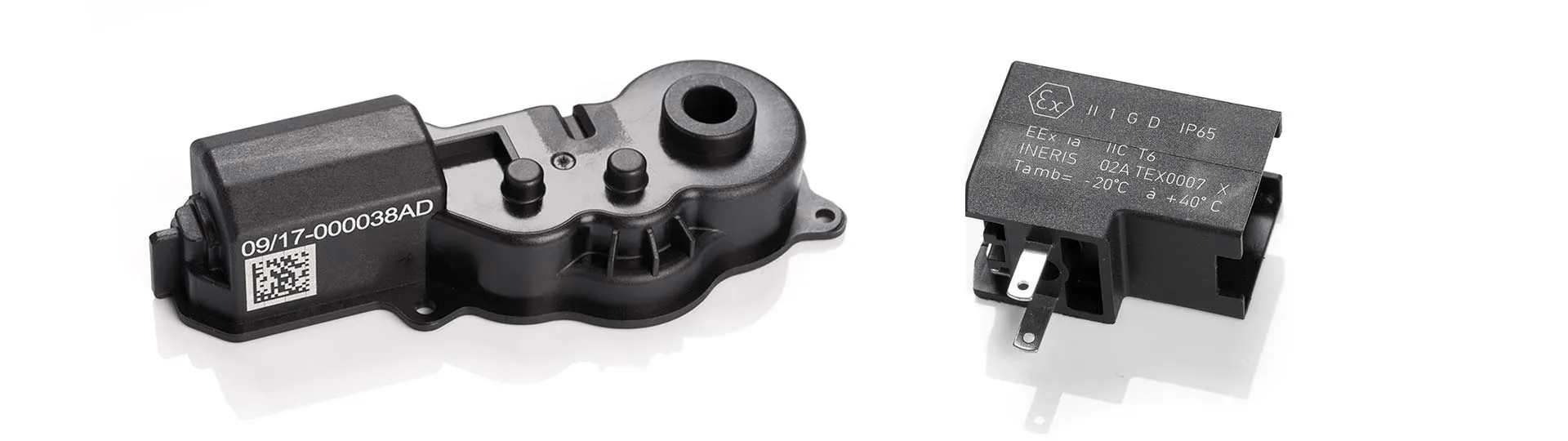
Marking lasers for plastics are the flexible and uncomplicated solution for permanent, abrasion-resistant marking of your products. They can be used both at manual workstations and integrated into production lines.
Polymers, also known as plastics, are imitations of natural substances. However, this does not mean that they are inferior, but that they are often indispensable due to their special parameters and even outperform natural substances in many areas. These plastics are materials that are artificially produced from macromolecules of organic origin.
In modern manufacturing, these materials play an important role in almost all industries, as they combine a high degree of robustness with great freedom in terms of shape design. However, marking or labeling them poses a particular challenge. Paints and varnishes often adhere poorly to polymers, as do the adhesives used for labels. Laser marking offers an efficient alternative here.
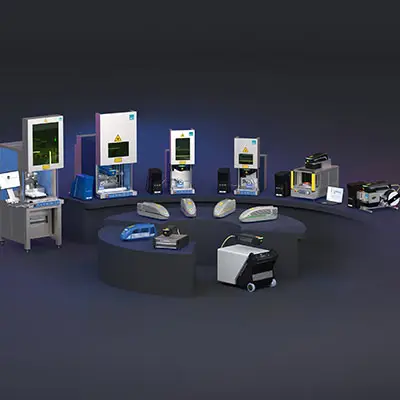
ACI Laser offers solutions for processing plastics. These are ideal for laser marking, laser engraving and laser marking of carbon-based or organic materials. Our product portfolio is as broad as the range of applications for the various plastics.
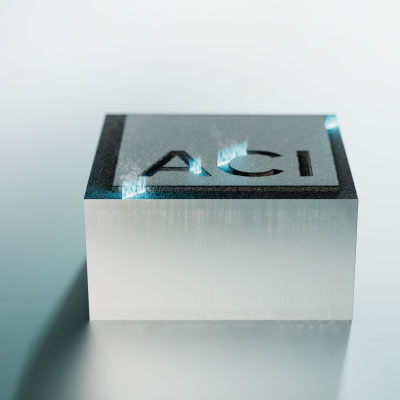
ACI Laser has a large number of different marking lasers for plastics. Whether engraving, laser marking, foaming or color change – our lasers enable the permanent marking of plastics.
With Magic Mark, ACI Laser offers you user-friendly and versatile software for reliable control of your laser systems, workstations and associated peripheral devices. Changes to the marking can be made at any time. Another advantage of a laser solution compared to the use of labels or print matrices.


Marking lasers are used in almost all areas in which plastics are processed: from the automotive industry to medical technology. Laser marking enables fast and permanent product marking and therefore complete traceability of the relevant workpieces.
Thanks to the high precision of modern marking lasers, marking with codes is also possible. Barcodes or QR codes allow large amounts of information to be stored in a very small space. If required, these can be easily accessed via a reader or smartphone.
The heat introduced into the materials by the laser prevents any significant distortion of the parts. The marking laser and its exposure time are matched to the respective substrate to ensure optimum processing without unnecessary heating.
In addition, pulsed lasers are mainly used for laser marking today. This means that these devices do not process the material with a continuous laser beam, but with short pulses. The length of a pulse is only a few nanoseconds. This allows the heat input to be significantly reduced.
CO₂, diode and fiber lasers are mainly used for laser marking plastics. While diode and fiber lasers are primarily suitable for marking, materials can also be engraved or cut with CO₂ lasers. An ultrashort pulse laser can be used to mark silicones extremely quickly and gently.
However, which laser is best suited to a specific application always depends on the individual case. Our experts will be happy to advise you individually.
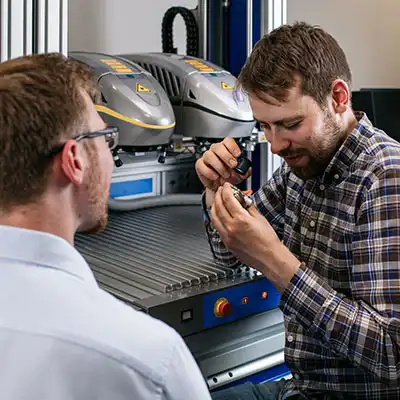
Yes, ACI Laser offers you solutions for manual workstations as well as for integration into planned or existing automated production lines. This means that the marking of your products can be integrated into the manufacturing process without affecting the performance of your production.
Press ENTER to confirm or press ESC to close
Here you can specify in detail which services you wish to allow. Individual services can be enabled or disabled within each category.